
50 Sanskrit Words for Kids, with Meanings, Grouped by Theme
Fifty simple Sanskrit words for children, grouped into family, nature, animals, the body and everyday life, with transliteration, meaning and tips for learning them through play.
A child who chants shlokas already knows dozens of Sanskrit words without realising it. Learning a few words on their own, with their meanings, is the moment the shlokas start to make sense from the inside: the moment a child hears sūrya in a verse and thinks, I know that word, that is the sun.
Here are fifty easy Sanskrit words for kids, grouped into five themes of ten. Each is given in simple transliteration with its meaning. Words are listed in their dictionary form, which for many nouns ends in -ḥ or -m in Sanskrit; you will hear these endings in shlokas. Many of these words will already sound familiar from Hindi, Kannada, Telugu, Tamil, Marathi, Bengali or other Indian languages.
Family and people
mātā, mother. pitā, father. bhrātā, brother. bhaginī, sister. pitāmahaḥ, grandfather (father’s father). pitāmahī, grandmother (father’s mother). putraḥ, son. putrī, daughter. mitram, friend. guruḥ, teacher.
A fun fact for older children: mātā, pitā and bhrātā look a lot like the English mother, father and brother. That is not a coincidence. Linguists have shown that Sanskrit and English both descend from a very ancient common ancestor language, so some of their oldest words are related.
Nature
sūryaḥ, sun. candraḥ, moon. jalam, water. agniḥ, fire. vāyuḥ, wind or air. pṛthvī, earth. ākāśaḥ, sky. vṛkṣaḥ, tree. puṣpam, flower. nadī, river.
Five of these, earth, water, fire, air and sky (or space), are the pañca mahābhūta, the five great elements of the Indian tradition. You can make a game of it: ask your child to point to something made of each element in the room.
Animals and birds
gajaḥ, elephant. siṃhaḥ, lion. aśvaḥ, horse. gauḥ, cow. mayūraḥ, peacock. kākaḥ, crow. matsyaḥ, fish. vānaraḥ, monkey. sarpaḥ, snake. śukaḥ, parrot.
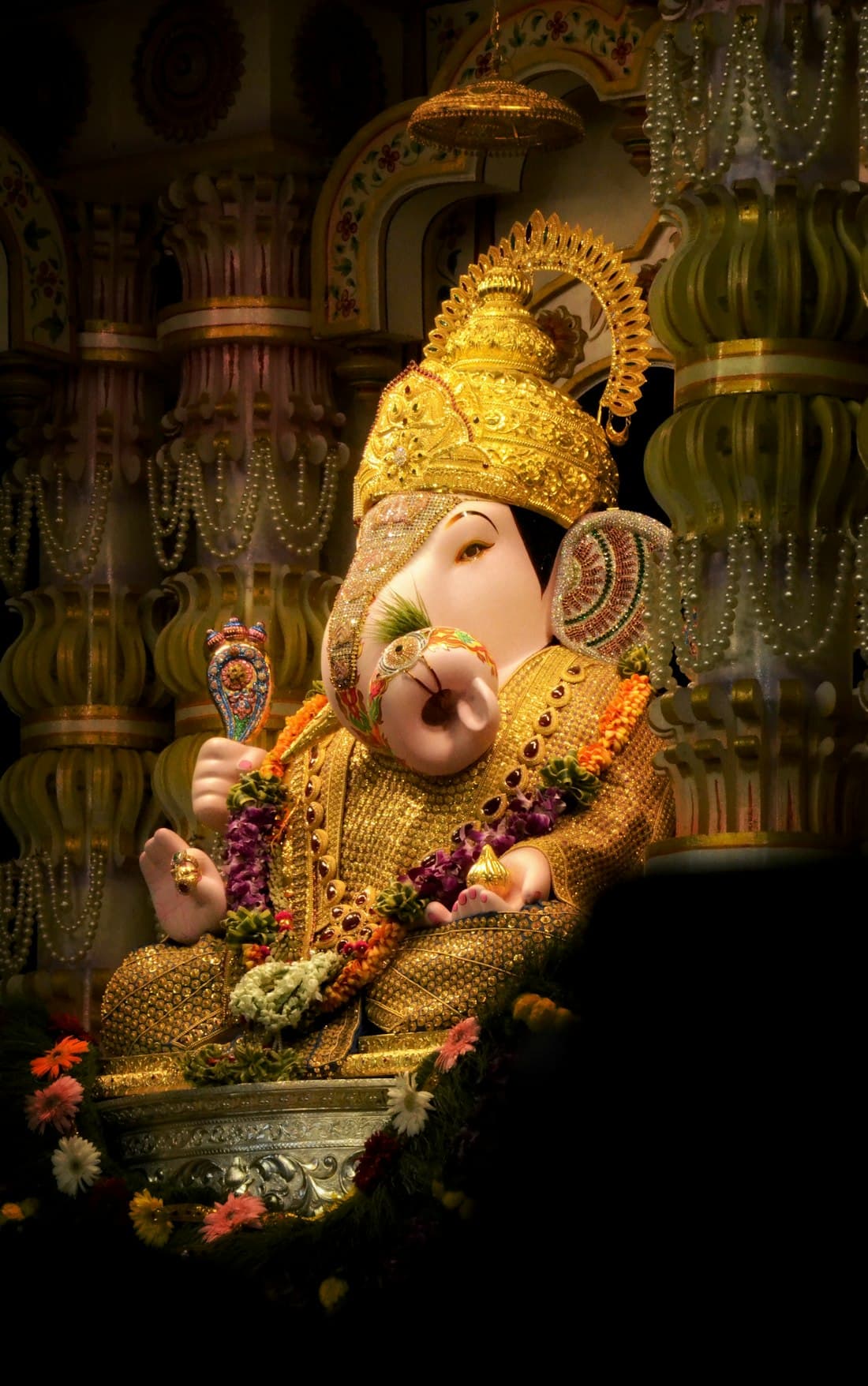
Many of these words appear in the names of gods and stories. Gaja is in Gajanana, the elephant-faced Ganesha. Siṃha is in Narasimha, the man-lion avatar. Matsya is the fish avatar of Vishnu. Vānara is the word for Hanuman’s people in the Ramayana. And mayūra, the peacock, is the vehicle of Kartikeya and India’s national bird.
The body
śiraḥ, head. mukham, face. netram, eye. karṇaḥ, ear. nāsikā, nose. dantaḥ, tooth. hastaḥ, hand. pādaḥ, foot. hṛdayam, heart. udaram, stomach.
These are perfect for a game of Sanskrit Simon Says: touch your śiraḥ, touch your nāsikā, wave your hastaḥ. Children usually learn all ten in a single afternoon.
Everyday life and values
gṛham, house. pustakam, book. annam, food. dugdham, milk. phalam, fruit. vidyā, knowledge or learning. satyam, truth. dharmaḥ, duty or right conduct. śāntiḥ, peace. ānandaḥ, joy.
These are the words children will meet most often in shlokas. Satyam is in satyameva jayate, truth alone triumphs, India’s national motto. Vidyā is in the shloka vidyā dadāti vinayam, knowledge gives humility. Śānti closes every peace mantra. And ānanda is in countless names.
Every Sanskrit word a child learns is a key. The next time they hear it in a shloka, the verse opens a little wider.
A few words children already use in English
Children may be surprised to discover that English has borrowed several words from Sanskrit. Yoga, mantra, guru, karma and avatar all come from Sanskrit. Ask your child if they can think of any others they have heard.
Numbers one to ten
Counting is another easy win, and children enjoy chanting the numbers like a rhyme: ekam, one; dve, two; trīṇi, three; catvāri, four; pañca, five; ṣaṭ, six; sapta, seven; aṣṭau, eight; nava, nine; daśa, ten. Several will already be familiar: pañca is in pañcatantra, the five books, sapta is in saptarṣi, the seven sages, and daśa is in daśāvatāra, the ten avatars and in Dussehra. Try counting stairs, steps on a walk or spoonfuls at dinner in Sanskrit for a week.
Simple phrases to try
Once children know a few words, simple phrases are fun. Namaste or namaskāraḥ is the greeting. Dhanyavādaḥ is thank you, as used in modern spoken Sanskrit. Svāgatam means welcome. Children can also try short sentences: eṣaḥ gajaḥ, this is an elephant; sā mama mātā, she is my mother.
How to teach Sanskrit words to children
Learn by theme. Teach one group of ten at a time, and spend a week on each. Ten related words are much easier to remember than ten random ones.
Use pictures and objects. Point to the sun and say sūryaḥ; hold up a book and say pustakam. Make flashcards with a picture on one side and the Sanskrit word on the other.
Play matching games. Write the Sanskrit words on one set of cards and draw the pictures on another, then turn them all face down and play memory match. Older children can sort a mixed pile of cards into the five themes.
Use the words at home. Call water jalam at dinner and milk dugdham at breakfast. Words used every day are learned without effort.
Connect to shlokas. When a known word appears in a shloka your child chants, stop and point it out. Each recognised word makes the verse feel more like their own.
Mind the sounds. Sanskrit has some sounds English does not, such as the difference between the soft t of pitā and the harder ṭ, and between short and long vowels, like the a and ā of mātā. Our post on the Sanskrit alphabet explains these clearly.
Many shlokas in our free shloka library include a word-by-word meaning, which is the natural next step after learning words on their own. If you would like your child to learn Sanskrit pronunciation and shlokas with a mentor, enquire about our classes through the Book a Class page.
Learn this with a mentor
Bring this to life for your child with our live, mentor-led Shloka Classes.
