
The Mahamrityunjaya Mantra for Kids: Meaning Word by Word
The Mahamrityunjaya mantra from the Rig Veda, in Devanagari and transliteration, with a simple word-by-word meaning for children, the image of the ripe cucumber, the legend of Markandeya and when families chant it.
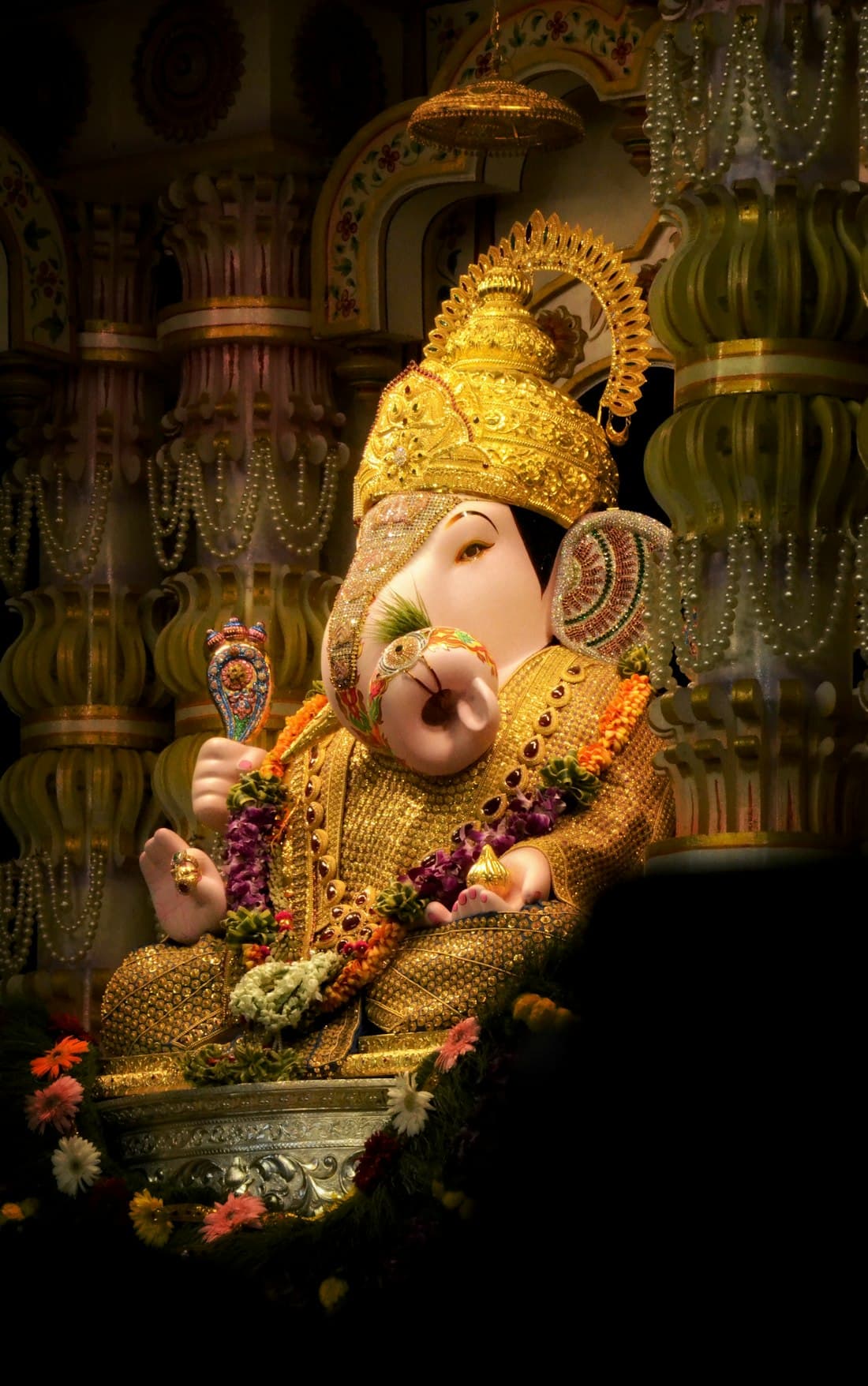
The Mahamrityunjaya mantra is one of the most revered mantras in the Indian tradition. Its name means the great mantra of victory over death: mahā, great; mṛtyu, death; jaya, victory. It is addressed to Shiva in his form as Tryambaka, the three-eyed one, and families across India chant it for protection, strength and peace.
It is also one of the oldest mantras still chanted every day, because it comes from the Rig Veda, the oldest of the Vedas. Here is the mantra, with a simple word-by-word meaning for children.
Where it comes from
The mantra is found in the Rig Veda, in the seventh mandala, hymn 59, verse 12. The seventh mandala is traditionally associated with the sage Vasishtha and his family. The same verse also appears in the Yajurveda. In the Vedic hymn, the verse is addressed to Rudra, the Vedic form associated with Shiva.
The mantra
ॐ त्र्यम्बकं यजामहे सुगन्धिं पुष्टिवर्धनम् । उर्वारुकमिव बन्धनान्मृत्योर्मुक्षीय माऽमृतात् ॥
Om tryambakaṃ yajāmahe sugandhiṃ puṣṭivardhanam | urvārukam iva bandhanān mṛtyor mukṣīya mā’mṛtāt ||
The Om at the beginning is added when the mantra is chanted on its own; it is not part of the verse as it appears in the Rig Veda.
Word-by-word meaning
tryambakam: the three-eyed one, Shiva. Tri means three, and ambaka means eye.
yajāmahe: we worship, we honour.
sugandhim: the fragrant one. Su means good and gandha means fragrance. A beautiful fragrance spreads everywhere without being seen, and the mantra uses it to describe the divine presence.
puṣṭi-vardhanam: the one who increases nourishment and strength. Puṣṭi means nourishment or wellbeing, and vardhana means increasing.
urvārukam: a cucumber, or a similar gourd that grows on a vine.
iva: like.
bandhanāt: from its bond, from its attachment. For the cucumber, this is the stem that holds it to the vine.
mṛtyoḥ: from death.
mukṣīya: may I be freed, may I be released.
mā amṛtāt: but not from immortality. Mā means not, and amṛta means the immortal, the undying.
The meaning, all together
We worship the three-eyed one, who is fragrant and who nourishes and strengthens all beings. Like a ripe cucumber that is released from its vine, may I be freed from death, but not from immortality.
The cucumber: a beautiful image
Children are often surprised that one of the most sacred mantras in India mentions a cucumber. But the image is very wise. When a cucumber is unripe, you have to pull or cut it from the vine. When it is fully ripe, it comes away gently, by itself, without any force or damage.
The mantra asks to be released in the same way: not torn away, not afraid, but gently, when ripe and ready. Many teachers also explain it more broadly: may I be freed from fear, from the things that hold me back, just as easily as a ripe fruit falls from the vine, and never be separated from what is eternal.
A ripe cucumber does not struggle to leave the vine. The mantra asks for that kind of peace.
The legend of Markandeya
A well-known legend from the Puranas is closely connected with this mantra in popular tradition. A sage named Mrikandu and his wife longed for a child, and Shiva granted them a son, Markandeya, who would be wise and devoted, but would live only until the age of sixteen.
Markandeya grew up deeply devoted to Shiva. When his sixteenth birthday came, Yama, the god of death, arrived to take him. The boy ran to a Shiva linga and threw his arms around it. Yama cast his noose, and it fell around both the boy and the linga. At that moment, Shiva burst out of the linga, defeated Yama and protected his devotee. Markandeya was blessed to remain young forever.
In many families, Markandeya is remembered as a great devotee associated with the Mahamrityunjaya mantra. This is a legend, told in various forms in different Puranas and temple traditions, and it is a lovely way to explain the mantra’s name to children.
When families chant it
Families chant the Mahamrityunjaya mantra in many situations: daily as part of prayer; on Mondays, traditionally associated with Shiva; on Maha Shivratri; and during the month of Shravana. Many families chant it when a family member is unwell, before a journey, or at times of worry, as a prayer for strength and protection. It is often chanted 11, 21 or 108 times, sometimes with a rudrākṣa mala.
It is a prayer, and families find comfort in it. It is not a substitute for medical care, and anyone who is unwell should always see a doctor.
Teaching it to children
The mantra is longer than a simple one-line mantra, so teach it in four parts: tryambakaṃ yajāmahe; sugandhiṃ puṣṭivardhanam; urvārukam iva bandhanān; mṛtyor mukṣīya mā’mṛtāt. Learn one part each day, adding the next once the first is steady.
Pay attention to pronunciation. The try in tryambakam is a single smooth sound. The ṛ in mṛtyoḥ is a vowel, a little like ri said quickly. The ṣ in puṣṭi and mukṣīya is made with the tongue curled back. Chanting slowly, with your child copying you, is the best way to get it right.
Children of around seven and above usually learn it comfortably, especially once they know the story of the cucumber and the legend of Markandeya.
Our free shloka library has many other shlokas and mantras for children, each with meaning and pronunciation. If you would like your child to learn chanting with correct pronunciation from a mentor, enquire about our shloka classes through the Book a Class page; fees are listed on our Pricing page.
Learn this with a mentor
Bring this to life for your child with our live, mentor-led Shloka Classes.
