
Krishna Stories for Kids in English: A Janmashtami Reading
The best-loved Krishna stories to tell a child at Janmashtami, what each one is really about, and how to celebrate the festival meaningfully at home.
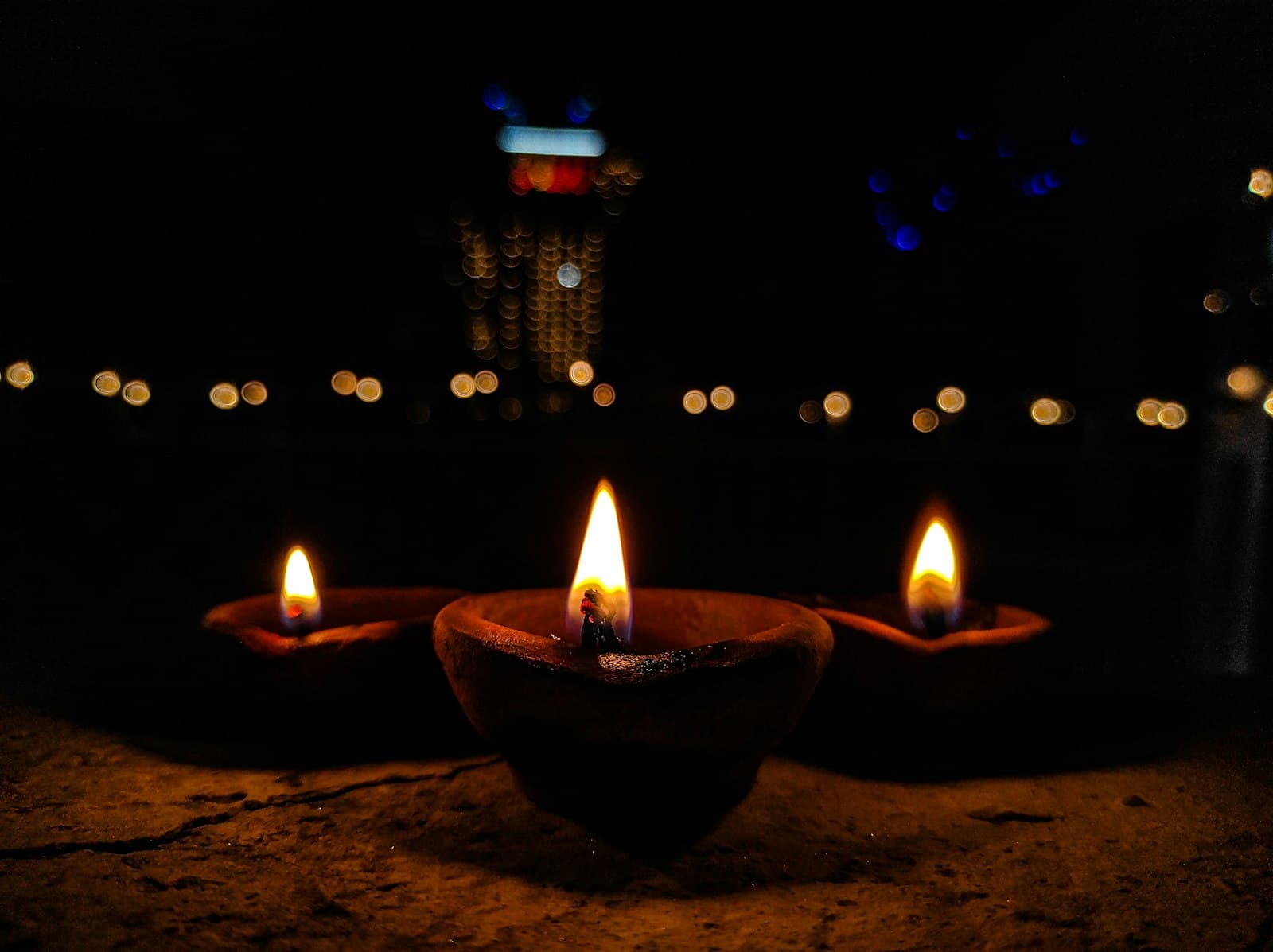
Krishna is the figure Indian children meet earliest and question most. He is a god, but he is also a toddler who steals butter, a boy who cheeks his mother, a friend who plays tricks, and eventually a charioteer who talks a warrior out of despair. That range is exactly why the stories work for children, and it is why Janmashtami is worth more than a fancy-dress competition.
Here are the stories most worth telling, what each is actually saying, and how to make the festival mean something at home.
The night he was born
Begin here, because it is genuinely thrilling. Kamsa, the tyrant king of Mathura, is warned that his sister Devaki’s eighth child will end him, and imprisons her and her husband Vasudeva. On a night of drenching rain, the child is born in that prison. The chains fall away, the guards sleep, and Vasudeva carries the baby across the flooded Yamuna to safety in Gokul, where he is raised by Yashoda and Nanda.
Children love the details, the storm, the river parting, the serpent Shesha sheltering the baby from the rain. What the story is doing underneath is establishing the pattern of the whole Krishna cycle: the mighty are not safe simply because they are mighty, and rescue often arrives quietly, at night, in the middle of a flood.
The butter thief
The stories of the young Krishna raiding butter pots, roping in his friends, being caught, and talking his way out are told with obvious affection rather than disapproval, which is worth noticing. This is a tradition entirely comfortable with a divine child being naughty.
For a child, that is quietly reassuring. The stories do not present goodness as never getting into trouble. They present a much-loved figure who is mischievous, charming and forgiven, and children who hear them tend to relax a little about their own imperfections.
Yashoda and the mouthful of mud
Accused by his friends of eating mud, Krishna denies it. Yashoda tells him to open his mouth, and sees inside it not mud but the entire universe, stars, oceans, worlds, and herself within them. Overwhelmed, she forgets what she saw, and goes back to being his mother.
Older children find this one lingers. It is the moment the stories admit what they have been hinting at, and then deliberately set the revelation aside in favour of ordinary love. Ask a child why they think Yashoda was allowed to forget; the answers are usually better than any explanation you could offer.
Lifting Govardhan
When the villagers prepare their annual offering to Indra, Krishna suggests they honour the hill and the cattle that actually sustain them instead. Indra, furious, sends a week of destroying rain. Krishna lifts the hill of Govardhan on one finger and holds it as an umbrella while the whole village shelters beneath.
The image is unforgettable, but the argument underneath it is what makes the story useful: honour what actually feeds you. It is also, incidentally, the first environmental parable most Indian children encounter.
Krishna does not tell the villagers to stop being grateful. He tells them to be grateful to the right thing.
Krishna and Sudama
Sudama, a poor childhood friend, is persuaded by his wife to visit Krishna, now a king, and ask for help. He is too ashamed to ask, and too poor to bring anything but a small twist of flattened rice. Krishna embraces him, eats the rice with delight, and sends him home without a word about money, where Sudama finds his hut transformed.
This is the story to tell a child who is worried about not having what their friends have. It says something specific about friendship, that the person who matters does not require you to arrive impressive.
The charioteer
For children of ten and up, the last story is the Gita. The greatest archer of his age sits down in his chariot and says he cannot fight. His friend, who is driving, does not scold him for losing his nerve, and does not tell him it will be fine. He talks him back onto his feet.
Children understand the feeling exactly, the moment before an exam or a performance when courage simply leaves. Told as the culmination of the butter-thief stories, the Gita stops being an intimidating philosophical text and becomes what it actually is: the same friend, still helping.
Celebrating at home
The traditional practices give children plenty to do: small footprints drawn leading into the house, a cradle for the infant Krishna, the fast broken at midnight, the singing. Add a shloka they can learn and recite, Vasudeva Sutam Devam is two lines and mentions Vasudeva, Kamsa, Devaki and Krishna, so every name in it opens one of the stories above.
That is the sequence worth aiming for. Learn the verse, ask who Kamsa was, and tell the story. Our live Bhagavad Gita and storytelling classes work in exactly that order, and a conversation with our mentors is an easy way to see whether it suits your child.
Learn this with a mentor
Bring this to life for your child with our live, mentor-led Ramayana for Kids and Shloka Classes.