
Diwali Story for Kids: Why We Celebrate Diwali
The story of Diwali for kids, told simply and warmly, why we light lamps, the tales behind the festival of lights, and the values it teaches children.
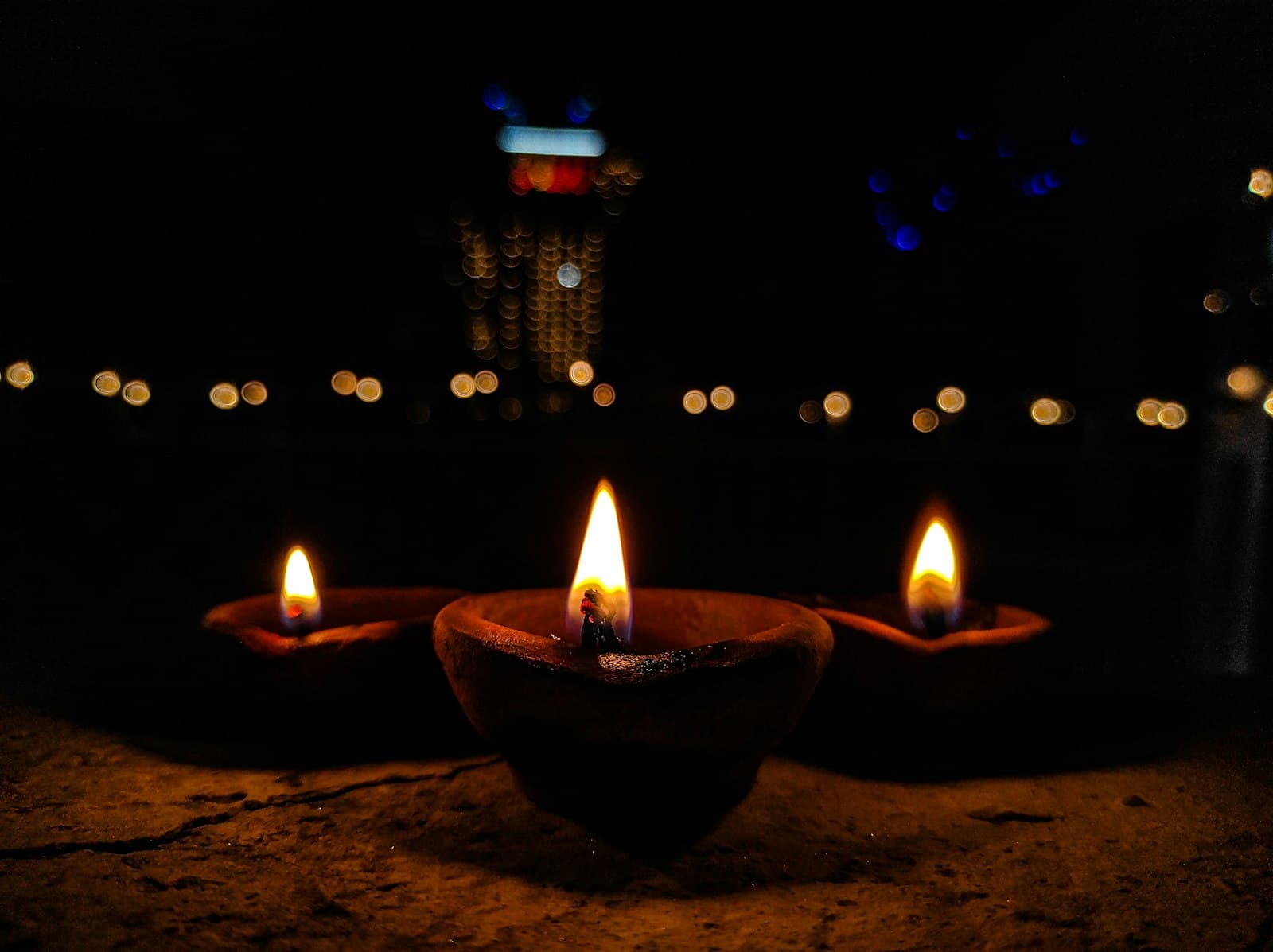
Of all the festivals of the year, none glows quite like Diwali. Rows of little lamps flicker on every wall and windowsill, homes are swept and decorated, sweets appear in abundance, and families gather in a warmth of light and colour. But behind the sparkle lies a story, several beautiful stories, in fact, and a child who knows them celebrates with a fuller heart.
This is the story of Diwali for kids, told simply and warmly: why we light lamps, the tales behind the festival of lights, how it is celebrated across the days, and the gentle values it carries. Read it with your child before the festival, and watch the diyas mean a little more when they are lit.
Why we call it the festival of lights
The word Diwali comes from “Deepavali”, which means a row of lamps. And that is exactly what the festival looks like, rows upon rows of little clay lamps, called diyas, lighting up the darkness of the night. But the lamps mean more than decoration. Light, in our tradition, stands for goodness, knowledge and hope, while darkness stands for ignorance and difficulty. When we light a diya at Diwali, we are celebrating the victory of light over darkness, and of good over evil.
This is a lovely idea for a child to hold: that a single small lamp can push back the dark, and that goodness, however small, always makes a difference. It is the heart of everything Diwali stands for.
The homecoming of Rama
The best-loved story behind Diwali comes from the Ramayana. Prince Rama, the beloved and truthful prince of Ayodhya, was sent away to live in the forest for fourteen long years to honour an old promise made by his father. During that time the demon king Ravana carried away Rama’s wife, Sita, and Rama, with the help of his loyal brother Lakshmana and the mighty Hanuman, journeyed far to rescue her and finally defeated Ravana, good triumphing over evil at last.
When at last the fourteen years were over and Rama, Sita and Lakshmana returned home to Ayodhya, the whole city overflowed with joy. To welcome their beloved prince home through the night, the people lit thousands upon thousands of little lamps along every path and rooftop, so that the darkness turned to light. That joyful welcome is remembered every year as Diwali, which is why we still light our diyas today.
A single diya cannot end the night. But a thousand of them, lit together, can turn the darkest evening into a river of light, the very heart of what Diwali celebrates.
Other stories of the festival
Diwali is celebrated across a vast land, and different regions and families remember different stories, which is part of its richness. In many parts of India, Diwali is also the time to welcome Lakshmi, the goddess of wealth and wellbeing, into a clean and brightly lit home; families sweep and decorate so that good fortune feels invited. In other tellings, Diwali marks the day Lord Krishna defeated the wicked Narakasura, another victory of good over evil.
It is worth telling a child that a festival can hold many stories at once, and that families may celebrate for different reasons, some remembering Rama, some welcoming Lakshmi, some honouring Krishna. What unites them all is the same beautiful theme: light over darkness, good over evil, hope over despair. Diwali is big enough to hold every one of these joys.
How Diwali is celebrated
Diwali is not a single day but a bright stretch of celebration. Homes are cleaned and decorated well beforehand, and colourful rangoli patterns are drawn at the doorway to welcome guests and good fortune. On the main night, families light rows of diyas, dress in their finest clothes, offer prayers together, and exchange sweets and gifts with relatives and neighbours. Children help make the rangoli, arrange the lamps and share out the mithai, and often enjoy the sparkle of lights and, in many places, fireworks.
A gentle word on fireworks: their noise and smoke can frighten animals and trouble those who are unwell, and safety always comes first. Many families today choose quieter, greener celebrations, more lamps, more sweets, more time together, and fewer loud crackers. It is a lovely chance to teach a child that the true joy of Diwali lies in the light and the togetherness, not the noise.
What Diwali teaches
Beneath the lamps and sweets, Diwali carries values worth passing on. It teaches that goodness triumphs in the end, giving a child hope and courage. It teaches gratitude and togetherness, as families set aside their busyness to gather, forgive and celebrate. And in the simple act of lighting a lamp, it teaches that each of us can bring a little light into the world, through kindness, honesty and care for others.
Sharing these meanings turns Diwali from a pretty routine into something a child genuinely understands and feels. When they light their diya knowing it remembers Rama’s homecoming and stands for goodness winning over evil, the festival takes root in their heart, and becomes a tradition they will one day be proud to pass on to children of their own.
Our live classes on Indian festivals, the Ramayana and our wider culture help children discover the stories, meanings and craft behind celebrations like Diwali, so the festivals they enjoy become festivals they truly understand. If you would like your child to grow up rooted in the joy and wisdom of our traditions, we would be delighted to hear from you.
Learn this with a mentor
Bring this to life for your child with our live, mentor-led Ramayana for Kids and Shloka Classes.