Mahabharata Characters for Kids: Names and Who’s Who
A clear guide to the people of the Mahabharata for children, who they are, how they connect, and what each one is really there to teach.
The Mahabharata defeats most children not through difficulty but through population. There are hundreds of named figures, several with more than one name, related to each other in ways that require a diagram. A child who cannot hold the cast cannot follow the story, however well it is told.
The solution is not to simplify the epic but to introduce a manageable number of people properly. Here are the ones that matter, what they are doing in the story, and, more importantly, what each is actually for.
The basic shape
Two sets of cousins. The five Pandavas, sons of Pandu, and the hundred Kauravas, sons of Dhritarashtra. Both are raised in the same palace, taught by the same teachers, and both have a claim to the same throne. The epic is what happens when that claim is not resolved.
Establish that much and a child has a frame to hang everyone on. Add people one at a time from here.
Yudhishthira, the eldest Pandava
Known for never telling a lie, which makes him sound insufferable until you notice what the epic does with him. His truthfulness is genuine and admirable, and he also gambles away his kingdom, his brothers and his wife in a single evening because he cannot stop playing dice.
This is why he is a better character for children than a simple paragon would be. The Mahabharata’s most honest man has a serious weakness and does enormous damage with it. That is a far more useful lesson than any amount of praise for honesty.
Bhima and Arjuna
Bhima is the strong one, enormous, hot-tempered, hugely appetitive, and fiercely protective of his family. He is the brother children like immediately. Arjuna is the archer, the disciplined one, the finest warrior of his generation and the one who will eventually sit down in his chariot and refuse to fight.
Between them they cover two very different kinds of strength, and it is worth pointing out to a child that the story ultimately turns on Arjuna’s crisis of nerve rather than on Bhima’s power.
Nakula and Sahadeva
The youngest twins, easy to skip and worth a sentence each. Nakula is celebrated for beauty and skill with horses, Sahadeva for a quiet wisdom, he is said to know what is coming and to be forbidden from saying so. Children remember them better with one detail each than with none.
Draupadi
Married to all five brothers, and the person to whom the epic’s central injustice is done. When Yudhishthira gambles her away and she is dragged into the assembly hall, she asks the question nobody in the room can answer: by what right did he wager her, having already lost himself?
Draupadi is not a passive figure and should not be presented as one. She argues, she refuses to forgive, and she holds the entire court to account for its silence. For children, her scene is where the Mahabharata stops being an adventure and becomes something more serious.
Duryodhana
The eldest Kaurava, and the epic’s antagonist. What makes him valuable for children is that he is not a monster. He is proud, he is genuinely wronged in small ways, he is fiercely loyal to his friend Karna, and he is entirely unable to let go of a grievance. His refusal, that he will not yield land enough to fit the point of a needle, is the sentence that causes the war.
Children who have been told he is simply evil miss the point. He is a recognisable person who could have stopped at several moments and chose not to.
The Mahabharata has almost no villains in the ordinary sense. It has people who were unable to stop.
Karna
The most complicated figure in the epic, and often a child’s favourite. Born to Kunti before her marriage and set adrift on a river, raised by a charioteer, he grows into a warrior the equal of Arjuna, and spends his life being refused recognition because of his supposed birth. Duryodhana gives him that recognition, and Karna repays it with absolute loyalty, including through a war he knows is wrong.
Karna is where children first meet genuine moral difficulty. He is generous, gifted, unfairly treated, and on the wrong side. Sit with that rather than resolving it.
Bhishma and Drona
The two elders, both bound by obligations that end up on the wrong side of the war. Bhishma vowed never to rule and to serve whoever sat on the throne, and that vow eventually requires him to fight the people he loves. Drona is the teacher of both sets of cousins, and his most famous act, demanding the thumb of the tribal archer Ekalavya, is one of the epic’s most uncomfortable episodes.
Neither is a straightforward hero, and the epic is not embarrassed about it. Children old enough to notice will ask why the good people are fighting for the wrong side, which is the question the Mahabharata exists to raise.
Krishna
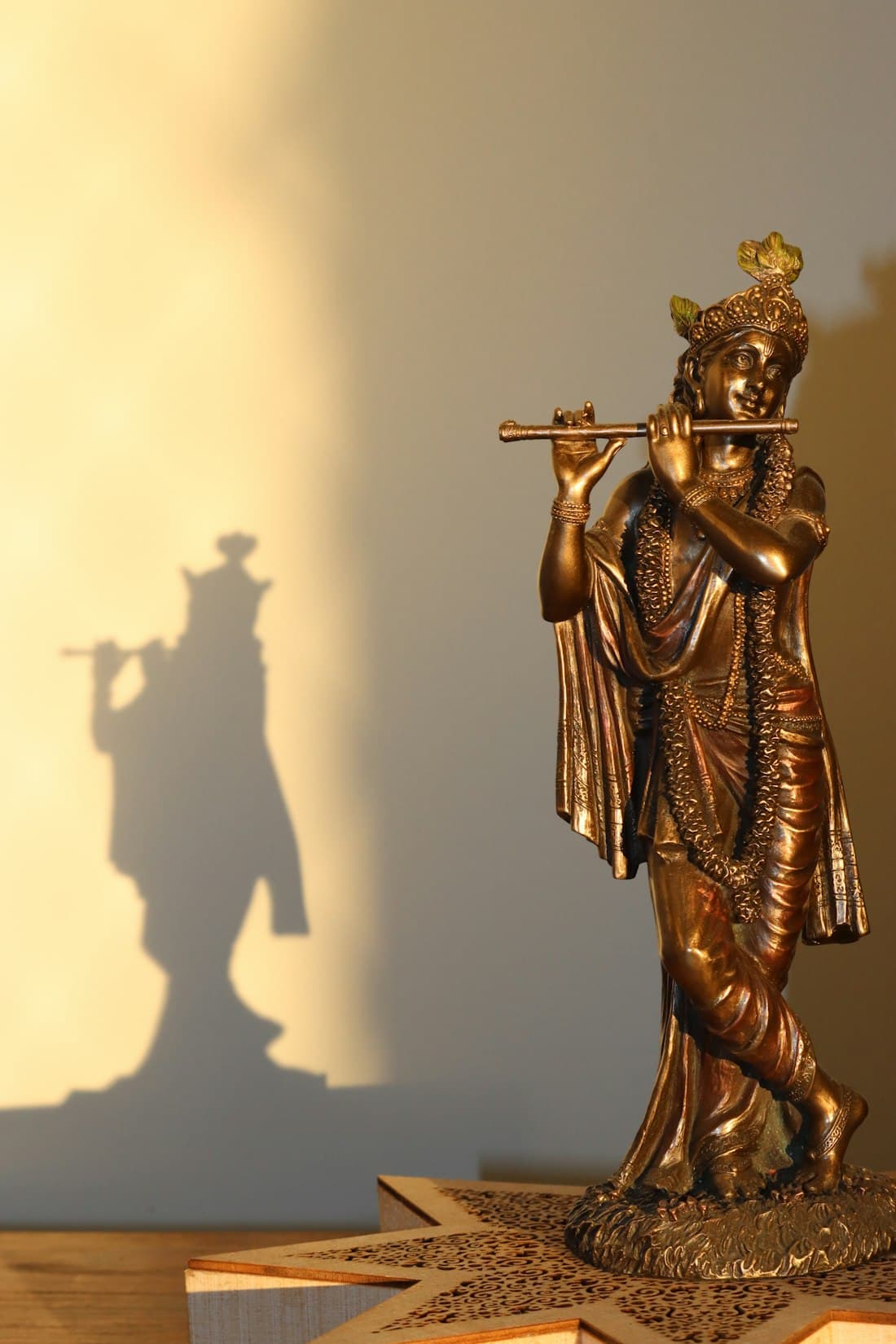
Cousin to both sides, and the one who refuses to fight while agreeing to drive Arjuna’s chariot. He is adviser, strategist and, in the Gita, teacher. For younger children he is simply the clever friend who helps. For older ones, his choices during the war raise real questions about ends and means, which is exactly the discussion worth having.
How to introduce them
Three or four people at a time, each with one memorable detail and one story. Draw the family tree once, on paper, and keep it where the child can look at it, the visual does more than any amount of repetition. And resist the urge to sort everyone into good and bad, because the epic itself declines to, and that refusal is its most valuable feature.
Our live Mahabharata classes for children introduce the cast in exactly this way, a few figures at a time, each anchored to a story, with room for the difficult questions. If your child is ready for the epic, an enquiry is a good place to begin.
Learn this with a mentor
Bring this to life for your child with our live, mentor-led Mahabharata for Kids.