
Bhagavad Gita Summary for Kids: All 18 Chapters in Simple Words
A simple, chapter-by-chapter summary of the Bhagavad Gita for children: the name of each of the 18 chapters, what it is about, and one idea from each a child can carry.
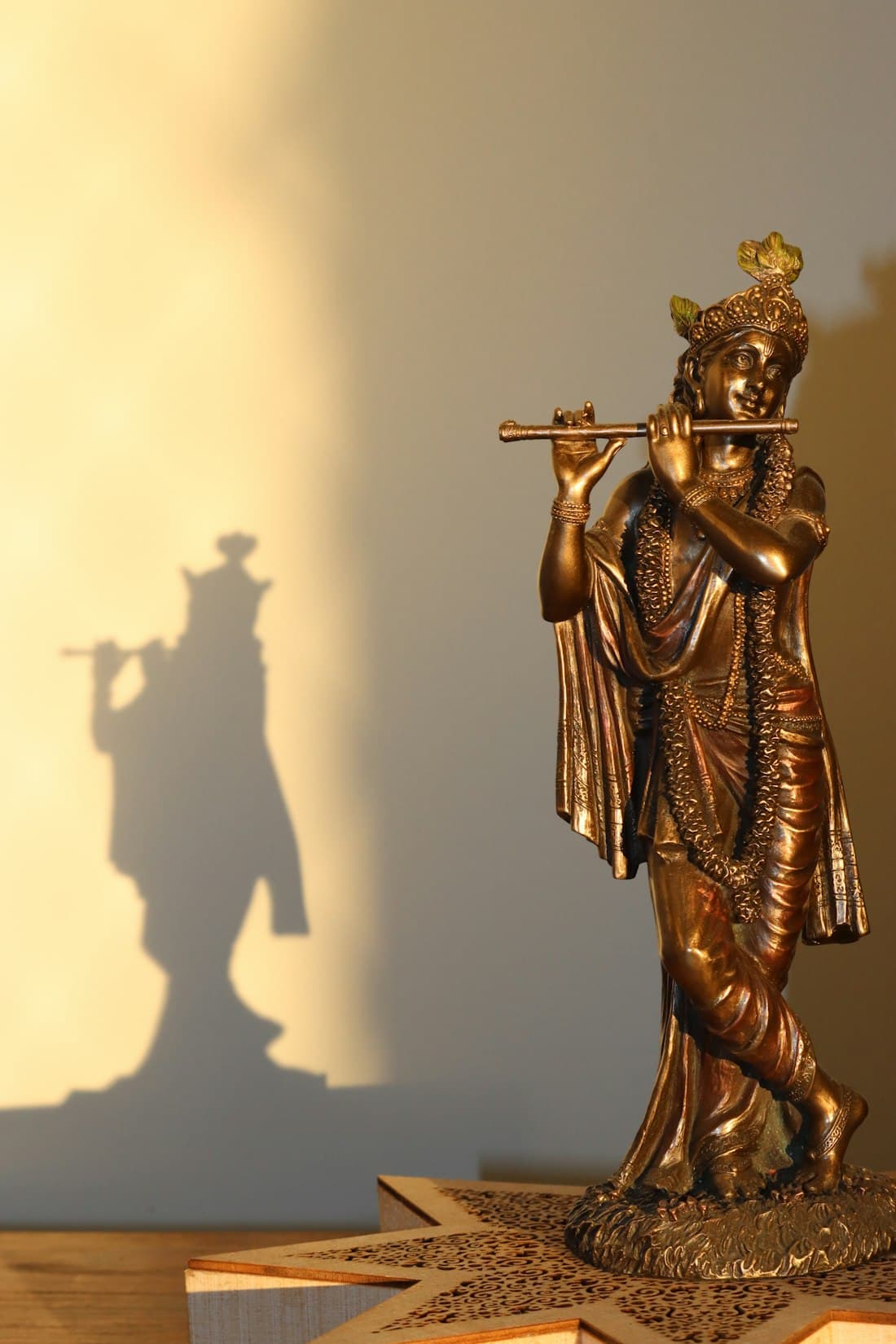
The Bhagavad Gita has 700 verses in 18 chapters. It is part of the Mahabharata, in the section called the Bhishma Parva, and it is a conversation between Krishna and Arjuna on the battlefield of Kurukshetra, just before the great war begins. The whole conversation is reported to the blind king Dhritarashtra by his charioteer Sanjaya, who has been given divine sight to see the battlefield from afar.
Each chapter has a name, ending in the word yoga, which here means a path or a way of connecting with the highest truth. Here is a simple summary of all eighteen, with one idea from each that a child can carry. Children of eight and above can follow this; younger ones will enjoy a chapter at a time.
Chapter 1: Arjuna Vishada Yoga, Arjuna’s sorrow
The armies face each other. Arjuna asks Krishna, his charioteer, to drive between them. He sees his cousins, his teachers and his grandfather Bhishma on the other side, and his courage collapses. He puts down his bow and says he will not fight. The idea for children: even the greatest heroes feel afraid and confused. The Gita begins with that honesty.
Chapter 2: Sankhya Yoga, the path of knowledge
Krishna begins to teach. The true self, the ātman, is never born and never dies; it is only the body that changes, as we change clothes. Krishna also gives the most famous teaching of the Gita: you have a right to your work, but not to its results (2.47). The idea: do your best, and let go of worrying about the outcome.
Chapter 3: Karma Yoga, the path of action
Arjuna asks: if knowledge is so important, why must I act at all? Krishna explains that no one can stay without acting even for a moment, and that work done for the good of others, without selfishness, is a path to the highest. He also says that whatever a great person does, others follow (3.21). The idea: your actions are an example to others, so do them well.
Chapter 4: Jnana Karma Sannyasa Yoga, knowledge and the renunciation of action
Krishna reveals that he has taught this wisdom before, in ancient times, and that whenever goodness declines, he comes to restore it (4.7–8). He explains how wise people act without being bound by their actions. The idea: goodness is always protected, and learning from a true teacher is precious.
Chapter 5: Karma Sannyasa Yoga, renunciation and action
Arjuna is confused: is it better to give up action or to act? Krishna says both lead to the same goal, but acting selflessly is easier for most people, like a lotus leaf that sits in water without getting wet. The idea: you can be in the middle of everything and still stay calm inside.
Chapter 6: Dhyana Yoga, the path of meditation
Krishna describes meditation: sitting steadily, controlling the mind and finding peace within. He says the mind is restless like the wind, but can be trained through practice and detachment. He also says we must lift ourselves up by our own efforts (6.5), and that balance in eating, sleeping and work is essential (6.17). The idea: a calm mind is trained, little by little, every day.
Chapter 7: Jnana Vijnana Yoga, knowledge and wisdom
Krishna explains that everything in the universe comes from him and rests in him, like pearls strung on a thread. He describes the different kinds of people who turn to God: those in trouble, those curious to know, those wanting something, and the wise. The idea: everything around us is connected.
Chapter 8: Akshara Brahma Yoga, the imperishable
Arjuna asks about the eternal and about what happens at the end of life. Krishna explains that whatever we think of most deeply, we become, and that remembering the highest truth always leads to it. The idea: what we think about most shapes who we become.
Chapter 9: Raja Vidya Raja Guhya Yoga, the royal knowledge and royal secret
Krishna shares what he calls the most precious secret: that he accepts even the simplest offering given with love, a leaf, a flower, a fruit or a little water (9.26). The idea: love matters more than the size of the gift.
Chapter 10: Vibhuti Yoga, the divine glories
Krishna describes how he can be seen in the best of everything: among rivers he is the Ganga, among the Pandavas he is Arjuna, among mountains he is the Himalaya. The idea: wherever you see something wonderful, beautiful or excellent, you are seeing a glimpse of the divine.
Chapter 11: Vishvarupa Darshana Yoga, the vision of the universal form
Arjuna asks to see Krishna’s true form. Krishna gives him divine sight, and Arjuna sees the entire universe inside Krishna: countless faces, suns, worlds and beings. Overwhelmed and afraid, Arjuna begs Krishna to return to his familiar, gentle form, and Krishna does. The idea: the universe is vaster than we can imagine.
Chapter 12: Bhakti Yoga, the path of devotion
Krishna describes the qualities of a true devotee: free of hatred, friendly and compassionate to all, forgiving, content, and steady in joy and sorrow (12.13). This short chapter of twenty verses is one of the most often learned by children. The idea: kindness, forgiveness and calm are the signs of a good heart.
Chapter 13: Kshetra Kshetrajna Vibhaga Yoga, the field and the knower of the field
Krishna explains the difference between the body, which he calls the field, and the self that knows the body, the knower of the field. The idea: you are more than your body.
Chapter 14: Gunatraya Vibhaga Yoga, the three qualities
Krishna explains that everything in nature is made of three qualities, called gunas: sattva, which is goodness, calm and clarity; rajas, which is activity, desire and restlessness; and tamas, which is laziness, confusion and heaviness. The idea: we can notice which quality is guiding us, and choose to move towards goodness.
Chapter 15: Purushottama Yoga, the supreme person
Krishna describes the world as a great ashvattha tree, a sacred fig, with its roots above and branches below, and explains how to cut through attachment to reach the highest. This chapter is also twenty verses long and is often chanted before meals in many homes. The idea: look beyond the branches to the roots.
Chapter 16: Daivasura Sampad Vibhaga Yoga, divine and demonic qualities
Krishna lists the qualities that lead us upward, such as fearlessness, honesty, generosity, self-control, kindness and humility, and those that lead us downward, such as pride, anger, harshness and greed. The idea: our qualities are choices, and we can grow good ones.
Chapter 17: Shraddhatraya Vibhaga Yoga, the three kinds of faith
Krishna explains that faith, food, effort and giving each come in three kinds, according to the three gunas. For example, giving that is done at the right time, to the right person, expecting nothing back, is the best kind. The idea: how and why we do something matters as much as what we do.
Chapter 18: Moksha Sannyasa Yoga, liberation through renunciation
The final and longest chapter brings everything together. Krishna summarises his teaching and offers his final words: give up all worries and take refuge in me; I will protect you; do not grieve (18.66). Arjuna replies that his confusion is gone and his memory restored, and that he will do as Krishna says (18.73). He picks up his bow. The idea: with trust and clarity, we can face whatever lies ahead.
The Gita begins with a hero who has put down his bow and ends with him picking it up again. Everything in between is how a frightened person finds their courage.
How to share the Gita with children
Do not try to cover all eighteen chapters at once. Read one summary a week, talk about the idea, and if your child is interested, learn one verse from that chapter. Several of the verses mentioned here, including 2.47 and 4.7, have their own pages in our free shloka library. Our live Bhagavad Gita classes for children take this same approach, one idea at a time, with correct chanting and plenty of discussion.
Learn this with a mentor
Bring this to life for your child with our live, mentor-led Bhagavad Gita for Kids.
