
Bhagavad Gita for Teenagers: 6 Verses for Exam Stress, Anger and Self-Doubt
Six Bhagavad Gita verses a teenager can actually use, for exam pressure, a short temper, a bad result and a phone that never goes down, each with the Sanskrit and a plain-English meaning.
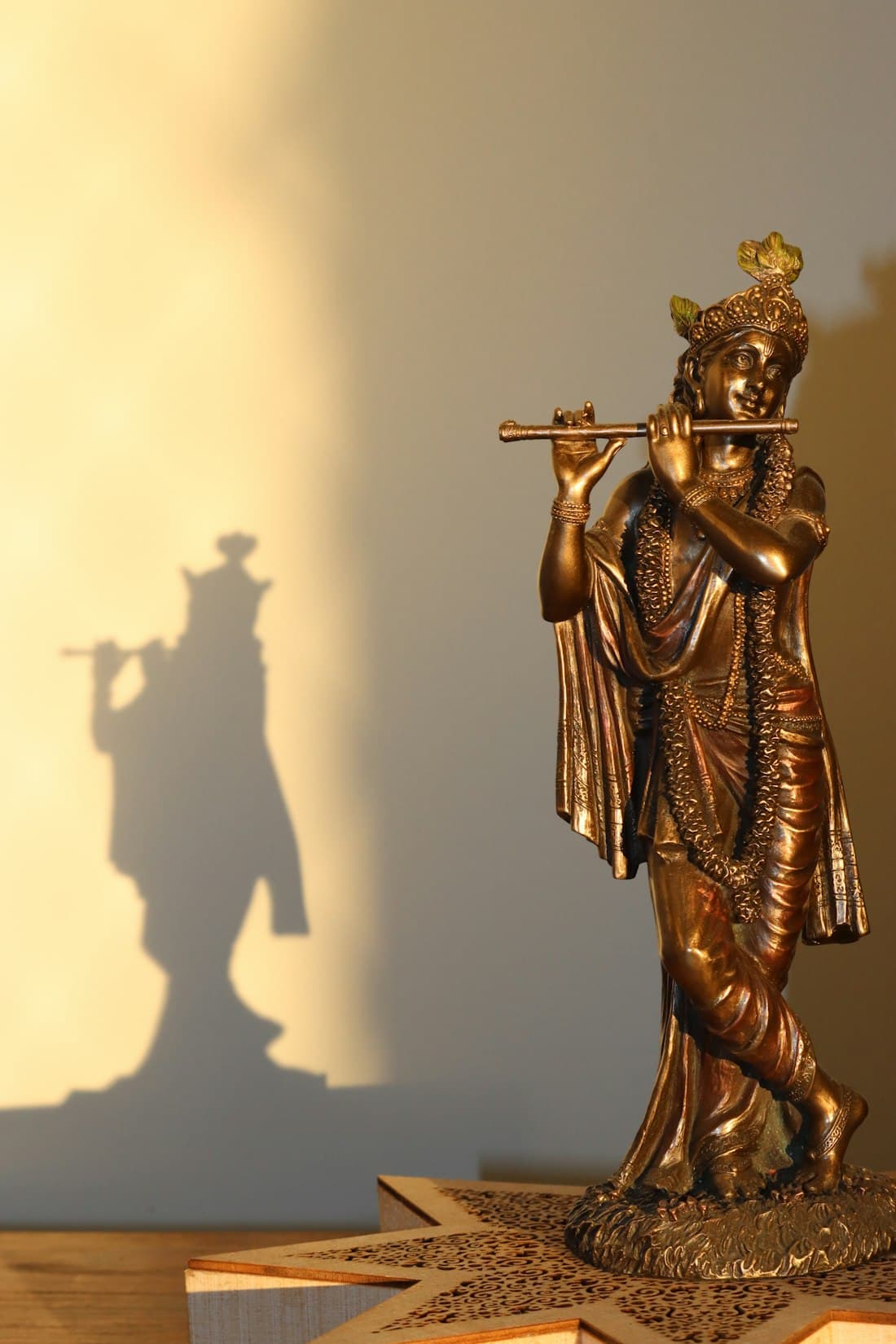
Most introductions to the Bhagavad Gita for children are pitched at seven-year-olds: a story about a frightened archer and a wise charioteer, and one verse about doing your best. That is the right place for a young child to start. But somewhere around thirteen the questions change. A teenager is not asking what the story is. They are asking whether any of it helps with the things actually going wrong this week: the board exam, the friendship that fell apart, the temper they cannot seem to hold, the feeling of not being enough.
The Gita has more to say to that age than to almost any other, because it is itself a conversation with a young person in crisis. Arjuna is not a child, but he is at exactly the point a teenager often reaches: highly capable, suddenly overwhelmed, and convinced the sensible thing is to give up. Whether your family says Bhagavad Gita, Gita, Geeta or Bhagwat Geeta, these six verses are the ones we find teenagers return to on their own, long after the class is over.
1. For exam stress: do the work, release the result (2.47)
कर्मण्येवाधिकारस्ते मा फलेषु कदाचन । मा कर्मफलहेतुर्भूर्मा ते सङ्गोऽस्त्वकर्मणि ॥ “Your right is to the action alone, never to its fruits. Do not let the fruit be your motive, and do not let that make you cling to doing nothing.”
This is the most quoted line of the Gita, and teenagers often hear it as “don’t care about marks”, which is not what it says. Read the second half carefully: it explicitly rules out giving up on the work. What it removes is the habit of studying with one eye permanently on the result, which is exactly what makes exam stress spiral. A student who is anxious about the mark studies worse, because half their attention is on the mark.
The practical translation for a fifteen-year-old: decide what a good day of revision looks like, do that, and count the day a success when it is done. The score arrives later and is partly out of your hands. The effort was entirely in them.
2. For the bad week that feels permanent (2.14)
मात्रास्पर्शास्तु कौन्तेय शीतोष्णसुखदुःखदाः । आगमापायिनोऽनित्यास्तांस्तितिक्षस्व भारत ॥ “Contacts with the senses bring cold and heat, pleasure and pain. They come and they go; they do not last. Bear them patiently.”
Teenage emotion has a particular quality: it feels final. A bad result, a falling-out, an embarrassing moment in front of the class all arrive with the conviction that things will always be like this. Krishna’s answer is almost scientific in tone. Heat and cold, pleasure and pain, are things that arrive and depart. The word he uses, titikṣasva, means to endure with patience, not to pretend you do not feel it.
This is a verse worth writing on a card. It does not deny that the week is bad. It reminds a young person that the week is a week.
3. For anger: how one thought becomes an explosion (2.62–63)
ध्यायतो विषयान्पुंसः सङ्गस्तेषूपजायते । सङ्गात्सञ्जायते कामः कामात्क्रोधोऽभिजायते ॥ क्रोधाद्भवति सम्मोहः सम्मोहात्स्मृतिविभ्रमः । स्मृतिभ्रंशाद्बुद्धिनाशो बुद्धिनाशात्प्रणश्यति ॥
These two verses describe a chain. Dwelling on something creates attachment to it; attachment becomes desire; blocked desire becomes anger; anger clouds judgement; clouded judgement makes you forget what you know; and once that goes, you make the decision you regret. It is a remarkably accurate description of a teenage argument about screen time.
What makes this useful is that a chain can be broken at any link, and the earliest links are the easiest. A teenager who learns to notice “I have been thinking about this for an hour and I am getting wound up” has caught it at the second link instead of the sixth. We teach it as a diagram, drawn on paper, and children are often surprised to find their own last argument mapped on it step by step.
4. For self-doubt: you are your own best friend, or your worst enemy (6.5)
उद्धरेदात्मनात्मानं नात्मानमवसादयेत् । आत्मैव ह्यात्मनो बन्धुरात्मैव रिपुरात्मनः ॥ “Lift yourself by your own self; do not let yourself sink. The self alone is the friend of the self, and the self alone is its enemy.”
Of all the verses in the Gita, this one tends to land hardest with older children, because it names something they already know: the voice that tells them they are not good enough is their own. Krishna does not say that voice is wrong to exist. He says the same mind that produces it can also be the one that lifts you, and that the choice between the two is partly a practised one.
A simple exercise: when your teenager says something harsh about themselves, ask whether they would say it to a friend in the same position. If not, the verse is asking them to be that friend to themselves.
5. For the phone at midnight: balance, not abstinence (6.17)
युक्ताहारविहारस्य युक्तचेष्टस्य कर्मसु । युक्तस्वप्नावबोधस्य योगो भवति दुःखहा ॥ “For one who is measured in eating and recreation, measured in effort at work, and measured in sleep and waking, yoga removes sorrow.”
Teenagers are deeply suspicious of advice that amounts to “give up everything you enjoy”, and they are right to be. The Gita does not ask for that. The key word here is yukta: measured, fitting, in proportion. Food, play, work, sleep and waking all appear in the same breath, and none of them is forbidden. Only the excess is.
That framing makes for a far better conversation about devices than a ban does. The question becomes whether the balance is right this week, rather than whether the phone is good or bad.
6. For how to treat other people (12.13)
अद्वेष्टा सर्वभूतानां मैत्रः करुण एव च । निर्ममो निरहङ्कारः समदुःखसुखः क्षमी ॥ “Free of hatred towards any being, friendly and compassionate, without possessiveness or ego, even in pain and pleasure, and forgiving.”
Chapter 12 describes the kind of person Krishna holds dear, and this verse is the opening of that portrait. It reads almost like a checklist for surviving a school corridor: hold no grudge, be friendly, be kind, do not make everything about yourself, and forgive. Chapter 12 is also short, only twenty verses, which is why it is so often the chapter set for school Gita recitation competitions.
How to share these without preaching
The fastest way to make a teenager reject the Gita is to quote it at them in the middle of an argument. These verses work when they are offered, not deployed. Read one together on a calm evening. Ask what they think it means before telling them. Let them disagree; Arjuna argues with Krishna for most of the book, and Krishna never once tells him to stop asking questions.
It also helps to learn the Sanskrit, not just the translation. A verse a young person can chant from memory is one they can reach for at the exam hall door without opening an app. In our live Bhagavad Gita classes, older children learn each verse with correct pronunciation first and then spend most of the class on what it means for their own week. A conversation with one of our mentors is the easiest way to see whether that suits your teenager.
Learn this with a mentor
Bring this to life for your child with our live, mentor-led Bhagavad Gita for Kids.
