
Hindu Culture and Shloka Classes for Kids in the USA: A Parent’s Guide
For Indian American parents: what options exist for teaching children shlokas, scripture and Hindu culture in the USA, how to fit classes around the American school year and time zones, and what to look for.
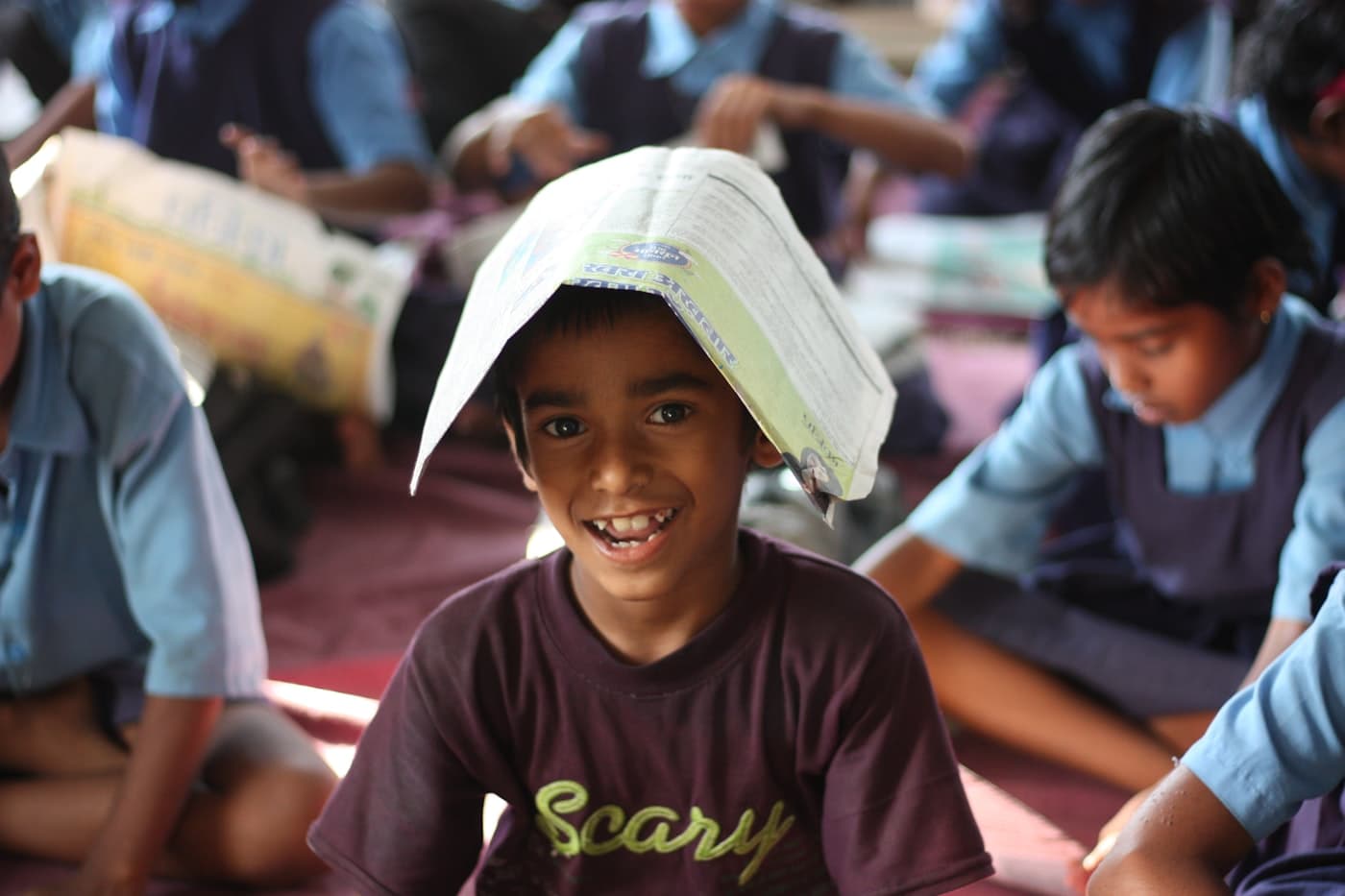
Indian American parents often describe the same moment. Their child is doing well at school, has friends, plays a sport, and is thoroughly American in all the best ways. Then a grandparent visits, or a festival comes round, and the parent realises the child does not know the shloka the family says before meals, or why Diwali is celebrated, or what the Ramayana is actually about. Most parents do not want to change their child. They want to add something.
The good news is that the USA has one of the richest Indian community infrastructures anywhere outside India. Here is a practical guide to the options, how to fit them into American family life, and what to look for.
What already exists around you
Over the past half-century, Indian Americans have built an extraordinary network of temples and cultural institutions. Some of the earliest traditional Hindu temples in the country, such as the Sri Venkateswara Temple near Pittsburgh and the Ganesh Temple in Flushing, Queens, date from the 1970s. Today there are temples in almost every metro area with a sizeable Indian community, from small community mandirs to very large complexes such as the BAPS Swaminarayan Akshardham in Robbinsville, New Jersey, inaugurated in 2023.
Alongside the temples, several organisations run weekly programmes for children. Chinmaya Mission centres across the country run Bala Vihar classes, usually on weekend mornings, covering stories, chanting and values. Hindu Swayamsevak Sangh USA runs Balagokulam sessions for children. ISKCON temples, BAPS mandirs and many independent temples run Sunday schools, language classes and festival programmes. In areas with large communities, such as New Jersey, the Bay Area, Greater Houston, Dallas, Chicago, Atlanta and Seattle, a family may have several to choose from.
These programmes are a real treasure. Their great strength is community: children meet other children like them, see festivals celebrated at scale, and grow up feeling that their heritage is shared, not just a private family thing. If there is one near you, it is well worth visiting.
Where families feel a gap
Many parents still feel something is missing. The most common concerns are pronunciation, depth and logistics. Large weekend groups make it hard for a teacher to correct every child’s Sanskrit sounds. Mixed-age groups can mean an eleven-year-old and a six-year-old hearing the same lesson. And in a country where weekends are already full of soccer, swimming, birthday parties and homework, a long drive to a Sunday programme can be the first thing to go.
This is where a small, live online class can complement, not replace, what your local community offers: focused pronunciation work, a batch grouped by age and level, and a slot that does not involve the car.
Fitting it around the American school year
Most American public schools run from late August or early September to late May or June, with a winter break around Christmas and New Year, a spring break in March or April, and long summer holidays. Weekends are Saturday and Sunday.
Many families find it easiest to start a new class at the beginning of the school year, when routines are being set, or in the summer, when there is more time. Starting in the middle of a busy term is possible, but it helps to choose a slot that will survive exam weeks and sports seasons.
Diwali increasingly appears on American school calendars. New York City added Diwali to its public school holiday calendar in 2023, for example, and a number of districts elsewhere give a day off or excuse absences. It is worth checking your own district’s calendar each year.
The time zone question
India Standard Time is UTC+5:30 all year round, with no daylight saving. The continental USA spans four time zones, and most of it observes daylight saving time from the second Sunday of March to the first Sunday of November. That means the gap between your home and India changes twice a year.
On the East Coast, India is nine and a half hours ahead during daylight saving time and ten and a half hours ahead in winter. On the West Coast, it is twelve and a half hours ahead in summer and thirteen and a half in winter.
In practice, the slots that work best are weekend mornings in the USA, which fall in the Indian evening, and, for the East Coast, weekday evenings, which fall in the Indian early morning. A Saturday 9:00 AM class in New Jersey is 6:30 or 7:30 PM in India, depending on the season: comfortable for everyone. A weekday after-school slot on the West Coast is much harder, because it falls in the middle of the Indian night. A good provider will tell you honestly which slots work for your time zone and which do not.
What to look for in a class
Live, not recorded. Pronunciation can only be corrected by someone who can hear your child.
Small batches, grouped by age and level, so the mentor has time for each child to chant alone.
Meaning taught alongside sound. A child who knows what a shloka says will keep it far longer.
A mentor who understands children growing up abroad: who can explain a festival in a way that makes sense to a child whose friends do not celebrate it, and who welcomes questions.
Clear scheduling in your own time zone, with the daylight saving changes handled for you.
The goal is not to make an American child less American. It is to give them a second inheritance to carry alongside the first.
Building it into home life
Whatever classes you choose, the most powerful thing happens at home. A two-line shloka before dinner, a story at bedtime from the Ramayana or Panchatantra, a lamp lit in the evening, a festival celebrated on the nearest weekend: these daily and yearly rhythms are what make a child feel that the culture belongs to them.
Grandparents can be wonderful teachers too. A weekly video call where a grandparent teaches one shloka or tells one story is a gift to both.
Our live online classes in shlokas, the Bhagavad Gita, the Ramayana, the Mahabharata and Indian culture are scheduled in small batches at times that work for American time zones, and many families combine them with a local Bala Vihar or temple programme. If you would like your child to learn with a mentor, enquire about our classes through the Book a Class page. You can read more on our For NRI families page, and fees are listed on our Pricing page.
Learn this with a mentor
Bring this to life for your child with our live, mentor-led Confidence Building and Storytelling.
