
Raising NRI Kids with Indian Culture: A Practical Guide for Parents Abroad
For Indian families in the USA, UK, Gulf, Australia and beyond: practical, unpreachy ways to give children a living connection to language, festivals, shlokas and stories, without turning it into a chore.
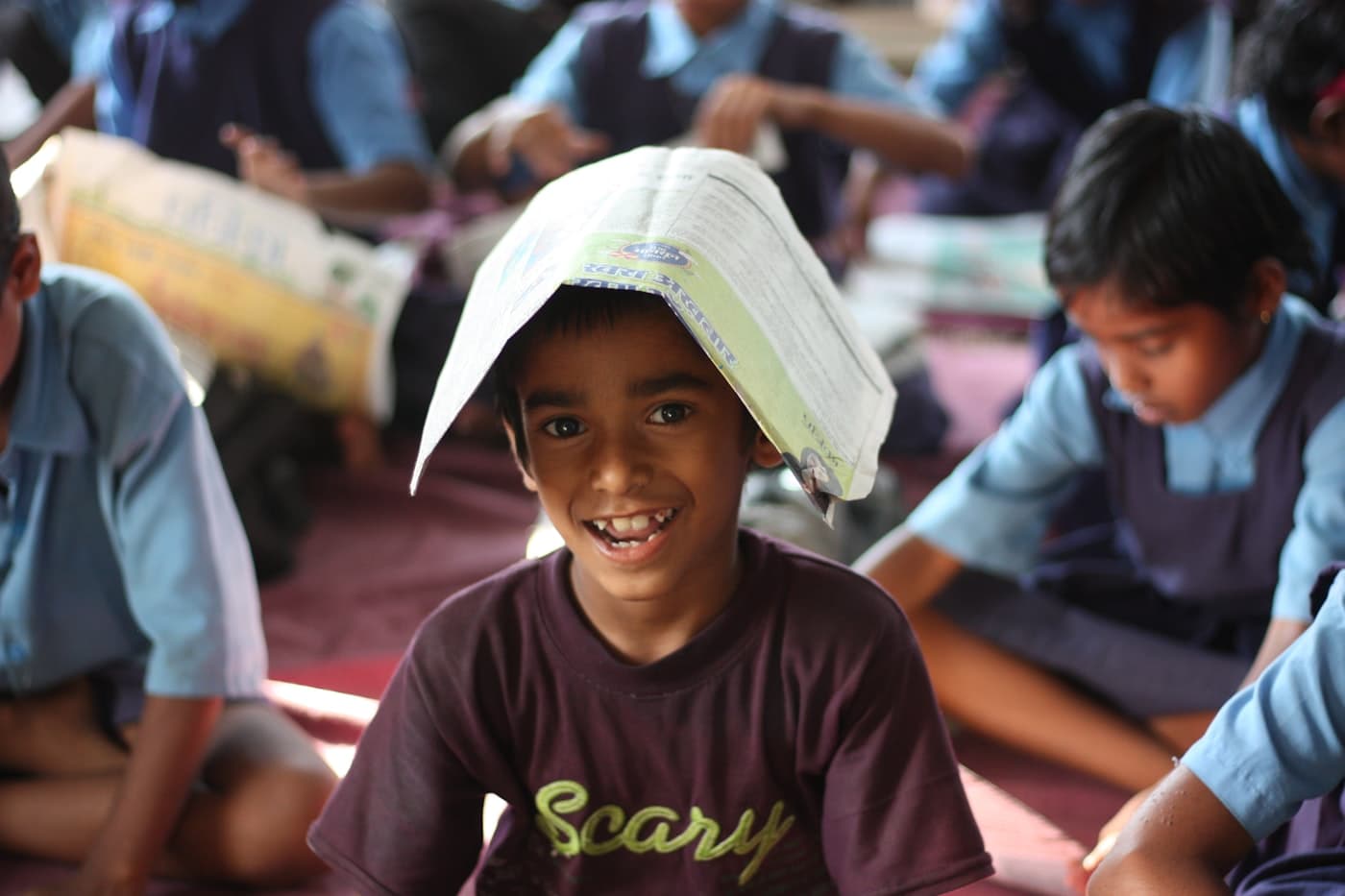
Almost every Indian parent raising children abroad has a version of the same moment. A grandparent on a video call asks the child something in the family language and the child answers in English. Or Diwali arrives on a school night and passes almost unnoticed. Or a child asks, with complete innocence, why the family does a particular thing, and the parent realises they are not sure how to explain it.
None of this means anything has gone wrong. It is simply what happens when a culture that used to be absorbed from the street, the school and the extended family has to be passed on inside a single household. The good news is that it can be, and that the families who manage it best are rarely the most intense about it. Here is what we see working for families in the USA, the UK, the Gulf, Australia, Singapore and elsewhere.
Start with small daily anchors, not big events
It is tempting to put all the cultural effort into festivals, because they are visible and joyful. But a child who meets their heritage only at Diwali and Navratri experiences it as an occasional costume. What actually builds connection is the small, daily thing: a shloka before dinner, a lamp lit in the evening, a word of the family language used for something ordinary.
Pick one anchor and keep it every day for a month before adding another. A two-line shloka said before meals takes fifteen seconds and, repeated daily for years, becomes part of who the child is.
Make the grandparents teachers, not just audiences
Video calls with grandparents often settle into a pattern of the child performing and the grandparent praising. That is lovely, but it wastes the most valuable teacher a family has. Ask a grandparent to teach one thing on each call: a shloka they learned as a child, a story from their own childhood, the meaning of a festival, a recipe. Children respond far better to “Ajji taught me this” than to “you should know this”.
Use stories as the main doorway
Children growing up abroad usually have rich access to the stories of the culture around them and far less to their own. The Ramayana, the Mahabharata, Panchatantra and the stories of Krishna are the fastest way in, because they are simply good stories. A child who loves Hanuman will want to know about the festival where Hanuman is remembered; a child who knows the Mahabharata will be curious about the Gita.
Read them at bedtime the way you would read any other book, a chapter a night, without turning each one into a lesson.
Work with your timezone, not against it
Much of the cultural infrastructure of Indian life, festival muhurtas, live temple broadcasts, classes, runs on Indian time. Families abroad often find themselves trying to join things at impossible hours and then giving up. It is far better to choose what fits your own week. Festivals can be celebrated at the weekend nearest the date. Classes can be chosen for slots that work locally, after school on weekdays in the UK and Europe, weekend mornings on the American coasts, and early evenings in Australia, Singapore and the Gulf.
Know your local community, and its limits
Where families live makes a real difference. In the large Indian communities of New Jersey, the Bay Area, Toronto, Leicester or Melbourne, there are temples, Bal Vihar programmes, cultural associations and festival celebrations within reach. Those are worth joining: a child who sees other children like them doing the same things feels far less alone. In the Gulf, Indian community life is large but often organised privately, through schools, associations and homes, and the opening of the BAPS Hindu mandir in Abu Dhabi has given UAE families a public focal point that did not exist a few years ago.
In smaller communities, in much of continental Europe, Japan or smaller cities anywhere, there may be very little locally. Here the home has to carry more, and a structured online class can fill the gap that a weekend school would fill elsewhere.
Language: some is far better than none
Many parents feel guilty that their children are not fluent in the family language. Fluency is wonderful, but it is not the only goal worth having. A child who understands the language when spoken to, who uses its words for family members, food and festivals, and who can pray and chant in it has a real connection to it, even if they reply in English. Shlokas are a particularly good bridge, because Sanskrit sound underlies most Indian languages and a child who chants learns to hear and produce those sounds accurately.
Answer the “why” questions honestly
Children abroad ask why far more than children in India do, because their friends do not do the same things. That is a gift, not a threat. When a child asks why we light a lamp, why we touch an elder’s feet, why we fast on a particular day, give the real answer if you know it, and say “let’s find out together” if you do not. A tradition explained is one a child can choose to keep. A tradition imposed without explanation is one they are likely to drop at sixteen.
Keep it joyful
Above everything, the families who succeed are the ones where culture feels like warmth rather than duty. A child who associates shlokas with a parent’s lap, festivals with excitement and stories with bedtime will carry those things into adulthood and, eventually, pass them on to their own children. That is the real goal.
If you would like help, our live online classes in shlokas, the Bhagavad Gita, the Ramayana, the Mahabharata and Indian culture are scheduled for families abroad, in small batches at times that suit your timezone rather than India’s. A conversation with one of our mentors is the simplest way to see whether it fits your child.
Learn this with a mentor
Bring this to life for your child with our live, mentor-led Confidence Building and Storytelling.
