Ramayana Story for Kids in English: A Simple Retelling
A short, values-rich way to share the Ramayana with your child, and the ten lessons it teaches that still shape great character today.

The Ramayana has been told to children for so long, and in so many ways, that almost every Indian adult carries a version of it inside them, heard from a grandmother, watched on a Sunday morning, glimpsed in the lamps of Diwali. It is one of the great inheritances of the culture, and passing it on to the next child in the line is one of the quiet joys of parenting.
Yet the epic is long and, in its fuller forms, complex. Parents often wonder how much to tell, how to keep it simple without hollowing it out, and how to make sure a child takes away not just an exciting adventure but the values that give the story its enduring power.
This is a short, values-rich way to share the Ramayana with your child, a retelling stripped to its warm essentials, followed by the lessons it quietly teaches and simple ways to bring it alive at home.
The journey in brief
Rama is a prince of Ayodhya, loved by everyone for his goodness, and heir to his father’s throne. On the eve of his coronation, an old promise made by his father forces the king to send Rama away to the forest for fourteen years instead. Rama accepts without a word of complaint, because his father has given his word, and his wife Sita and devoted brother Lakshmana insist on going with him rather than let him face the forest alone.
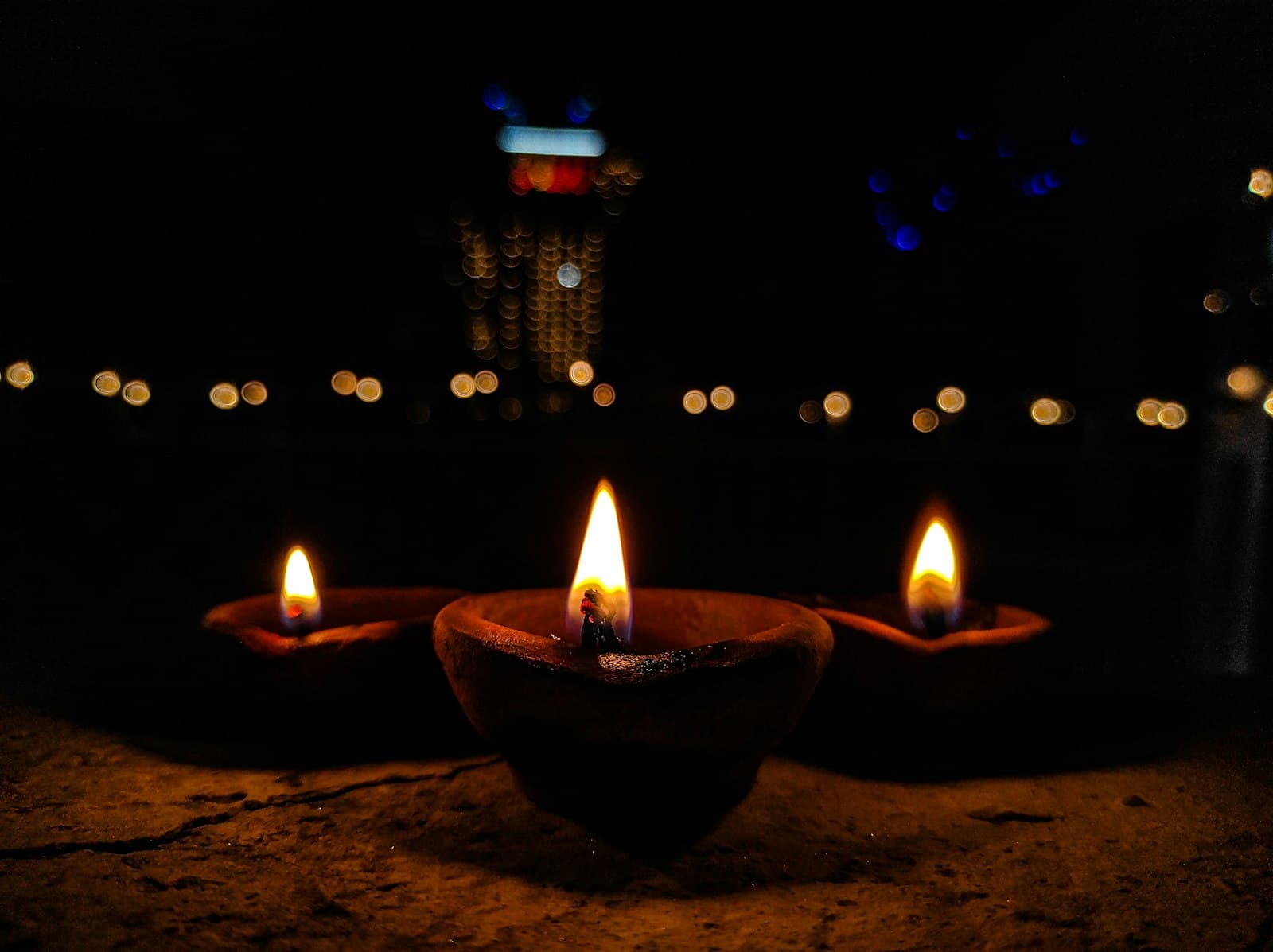
In the forest, the demon king Ravana carries Sita away by trickery to his island kingdom of Lanka. Heartbroken but resolute, Rama sets out to find her. He is helped by an army of vanaras, forest-dwellers, led by the mighty and utterly devoted Hanuman, who leaps across the ocean to find Sita and carry Rama’s message of hope. A great battle follows, Ravana is defeated, and Rama, Sita and Lakshmana return home to a city that lights thousands of lamps to welcome them. That homecoming is the Diwali we still celebrate.
Told with warmth and a little drama, the promise, the forest, the leap across the sea, the lamps, this outline captivates children of almost any age. You can stretch or shorten it, but this is the beating heart of the tale.
Ten values a child carries away
What makes the Ramayana more than an adventure is that nearly every character embodies a virtue a child can recognise. Rama keeps his word even when it costs him a kingdom, teaching that a promise is a serious thing. Sita shows courage and dignity through great hardship. Lakshmana models loyalty, giving up comfort to stand beside his brother. Bharata, offered the throne, refuses to take what is rightfully Rama’s, a lesson in honesty and fairness that children feel keenly.
And Hanuman, the character children love most, shows that devotion, humility and courage can live in the same heart. He is enormously strong yet never boastful, placing all his gifts at the service of something larger than himself. Across the whole epic a child meets courage, honesty, keeping promises, respect for parents, loyalty, humility, devotion, self-control, kindness and the willingness to stand up for what is right. These are not lectured; they are lived by people the child comes to love.
A child does not remember a list of virtues. A child remembers Hanuman leaping across the ocean because he could not bear to let his friend down, and quietly decides that is the kind of person they would like to be.
Handle the difficult parts with honesty
The Ramayana contains battle, exile and hard choices, and thoughtful parents sometimes worry about this. There is no need to hide the difficulty, children meet conflict in every good story they love, but you can pitch it to their age. For the youngest, keep the focus on friendship, the search and the joyful homecoming. For older children, the harder questions are precisely where the richness lies.
When an older child asks whether it was fair that Rama had to leave, or whether Ravana had any good in him at all, treat the question as a gift rather than a problem. The epic has always invited such reflection, and a child who wrestles honestly with it comes away not confused but thoughtful. Meeting difficulty with a wise adult beside you is exactly how children learn to meet it in life.
Make it interactive, not just a bedtime tale
The Ramayana rewards participation. Pause at a turning point and ask your child what they would do in Rama’s place, or how Sita must be feeling. Let them predict what happens next. These small invitations turn a passive listener into an active thinker, and the values sink in far deeper when a child has reasoned about them rather than simply heard them.
Beyond talking, bring the story into your child’s hands. Draw the forest or the ocean crossing together. Act out Hanuman’s leap in the living room. When Diwali comes, light the lamps with the tale fresh in mind, so the festival stops being a routine and becomes the ending of a story your child now knows and loves. Craft, drama and celebration fix the epic in a child’s memory in a way no single telling can.
Why these old stories still matter
It is fair to ask why an ancient epic deserves a place in a modern child’s life. The answer is that the questions the Ramayana asks have not aged at all. What do we owe the people who depend on us? Is it worth keeping a promise when breaking it would be easier? How do we behave when we have power? A child who has thought about these things through a story they love is better prepared for the very ordinary moral moments of school and friendship than one who has not.
Our live Ramayana classes for children are built around exactly this blend of story, values, discussion and craft. We tell the epic with warmth, pause to let children think, and give them creative ways to make it their own. If you would like your child to grow up with these heroes as companions, we would love to hear from you.
Learn this with a mentor
Bring this to life for your child with our live, mentor-led Ramayana for Kids.