
The Ramayana Kanda by Kanda: A Parent’s Guide for Ages 4 to 12
The Ramayana is told in seven books, or kandas. Here is what happens in each, which parts suit which age, and the conversation each kanda opens with your child.
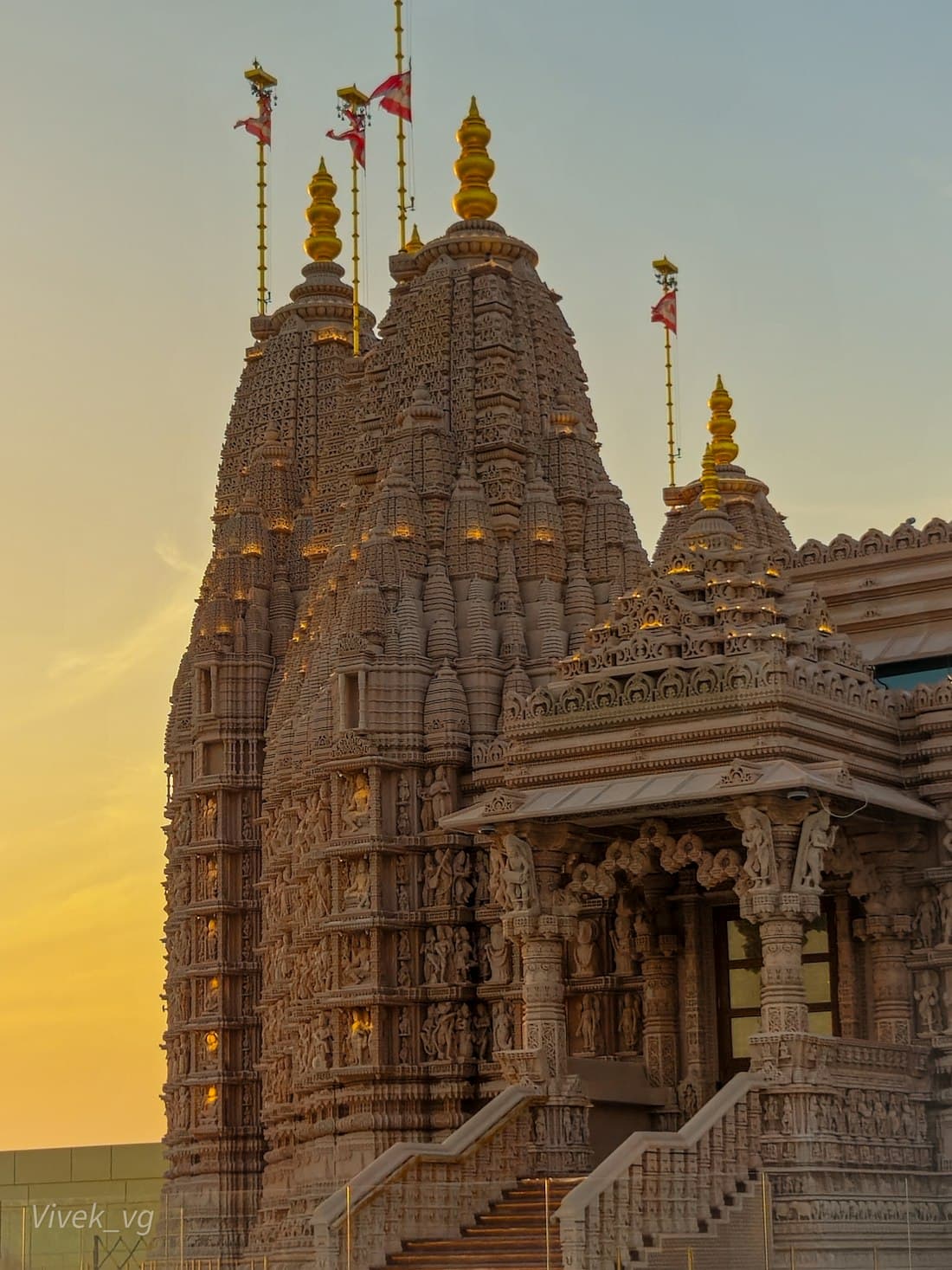
Most parents tell the Ramayana as one long story, from Rama’s birth to the lamps of Diwali, in a single sitting or a few evenings. That works beautifully for a short retelling. But the epic as Valmiki composed it is divided into seven books, called kandas, and knowing them gives a parent something more useful than a plot summary: a map. Each kanda has its own mood, its own central characters and its own natural lesson, and some suit a four-year-old far better than others.
Here is the Ramayana kanda by kanda, with a note on which ages each part suits and the question it naturally raises.
1. Bala Kanda: the boyhood of Rama
The first book tells of King Dasharatha of Ayodhya, his long wish for children, and the birth of four sons: Rama, Lakshmana, Bharata and Shatrughna. As a boy, Rama is taken by the sage Vishwamitra to protect his forest hermitage, and on the journey learns from him. The book ends in Mithila, where Rama lifts and breaks the great bow of Shiva that no one else could string, and marries Sita.
Ages: from four. This is the gentlest kanda and the easiest one to begin with, because it is about childhood, learning from a teacher, and a feat of strength that ends in a wedding. The question to ask: what did Rama learn from Vishwamitra, and who is a teacher you have learned from?
2. Ayodhya Kanda: the promise and the exile
Just as Rama is about to be crowned, his stepmother Kaikeyi reminds Dasharatha of two boons he once promised her. She asks that her son Bharata be made king and that Rama be sent to the forest for fourteen years. Bound by his word, the grief-stricken king agrees. Rama accepts without anger and leaves with Sita and Lakshmana. Dasharatha dies of sorrow. Bharata, returning home, refuses the throne, goes to the forest to beg Rama to come back, and when Rama will not break his father’s word, carries Rama’s sandals back to Ayodhya and places them on the throne to rule in his name.
Ages: from five, with care about Dasharatha’s death for the youngest. This is the moral centre of the epic, and it is full of hard questions. Was it fair? Should a promise be kept even when it hurts? Bharata’s choice in particular moves children deeply: he was handed a kingdom and gave it back because it was not rightfully his.
3. Aranya Kanda: the forest and the abduction
In the forest the three live simply, eventually at Panchavati. The demoness Shurpanakha is rebuffed and, in revenge, stirs her brother Ravana, the king of Lanka. Ravana sends Maricha disguised as a golden deer to lure Rama and then Lakshmana away, and carries Sita off. The old vulture Jatayu fights Ravana to save her and is mortally wounded. Grieving, Rama and Lakshmana begin their search, and on the way meet Shabari, the elderly devotee who has waited years to offer Rama berries she has tasted first to be sure they are sweet.
Ages: six and up for the abduction; the Shabari episode suits any age. This kanda is where the story turns dark, so pace it to your child. Jatayu and Shabari are the two figures to dwell on: an old bird who fought far beyond his strength, and an old woman whose offering was humble and perfect. Ask: who was the bravest in this part, and why?
4. Kishkindha Kanda: friendship and the search
Rama and Lakshmana reach Kishkindha, the kingdom of the vanaras, and meet Hanuman, who brings them to Sugriva, the exiled vanara prince. Rama and Sugriva form an alliance: Rama helps Sugriva regain his kingdom from his brother Vali, and Sugriva sends search parties in every direction to find Sita. The southern party, with Hanuman, Angada and Jambavan, reaches the edge of the ocean.
Ages: from five. This is the kanda of friendship and teamwork, and children respond to the idea that Rama, a prince, cannot do this alone and needs friends very different from himself. The Vali episode is morally complicated and is better saved for older children who can discuss it. Ask: why did Rama need Sugriva’s help?
5. Sundara Kanda: Hanuman’s leap
Reminded of his own forgotten strength by Jambavan, Hanuman leaps across the ocean to Lanka. He searches the city, finds Sita in the Ashoka grove, and gives her Rama’s ring as proof that he is Rama’s messenger and that help is coming. Captured, he has his tail set alight, and uses it to set Lanka ablaze before leaping home with the news.
Ages: every age, and the favourite of almost every child. Sundara means beautiful, and many families read this kanda on its own as a source of courage. Its central lesson is one children badly need: Hanuman did not know how strong he was until someone who believed in him reminded him. Ask: what is something you can do that you have forgotten you can do?
6. Yuddha Kanda: the bridge, the battle and the return
The vanara army builds a bridge across the sea to Lanka. Ravana’s brother Vibhishana, who had urged him to return Sita, is cast out and joins Rama. In the great war that follows, Lakshmana is gravely wounded and Hanuman flies to the Himalaya to fetch the healing herb, carrying back the whole mountain when he cannot tell which plant it is. Ravana is finally defeated. Rama, Sita and Lakshmana return to Ayodhya, the city lights lamps to welcome them, and Rama is crowned.
Ages: six and up for the battle; the homecoming suits everyone. Keep the war brief for young children and dwell on the bridge, where everyone, down to a tiny squirrel in the popular retellings, helps; on Vibhishana, who chose what was right over his own family; and on the lamps, which are why we light ours at Diwali.
7. Uttara Kanda: after the return
The final book tells of events after the coronation, including Sita’s later life in the hermitage of Valmiki and the birth of her twin sons, Lava and Kusha. Its episodes raise some of the most difficult questions in the whole tradition, and families and scholars have discussed them for centuries.
Ages: ten and up, and with discussion. Many retellings for children end at the coronation, and that is a reasonable choice for younger listeners. For older children, the questions this book raises about fairness and duty can lead to some of the most thoughtful conversations you will have with them.
One kanda at a time
Telling the Ramayana kanda by kanda, one a week, gives a child something to anticipate and gives each part room to breathe. It also lets you return to a single kanda, Sundara Kanda especially, whenever a child needs that particular lesson. Our live Ramayana classes follow this structure, with a story, a discussion and a short quiz in every session, and children aged four to twelve are grouped so that each hears the epic at a depth that suits them.
Learn this with a mentor
Bring this to life for your child with our live, mentor-led Ramayana for Kids.
